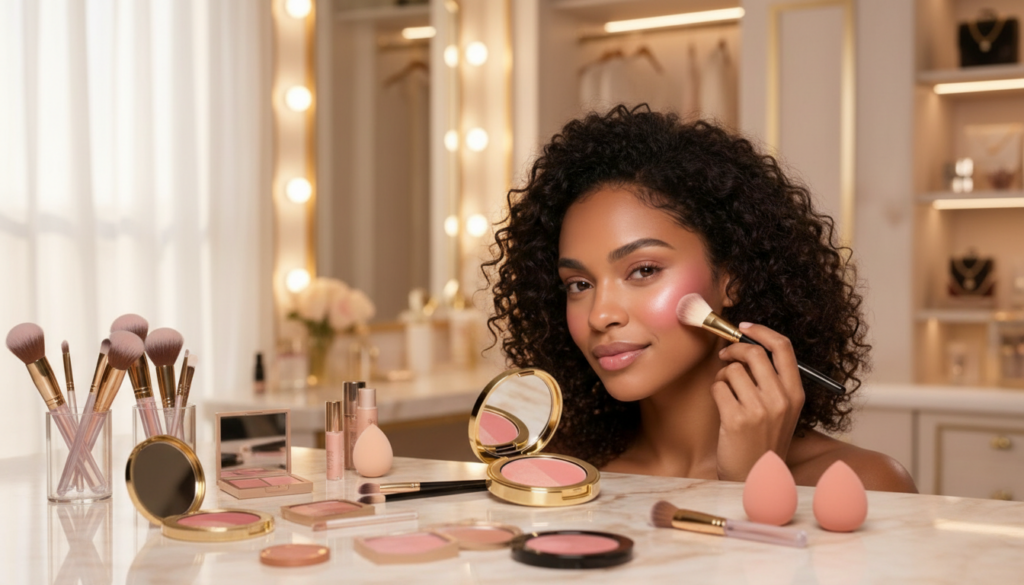
How to Choose the Right Blush Highlighter for Your Skin
When learning how to pick blush highlighters that make your skin look better without looking heavy, remember these three things: how well they work with your skin type, what kind of formula they are (powder, cream, or liquid), and how much color they give off. It’s very important to pick the right shade because the best blush highlighter for fair skin may not be the same as the best one for darker skin. People with lighter skin look good in soft peach colors, and people with darker skin look good in bronze and gold colors. Cream and liquid formulas mix well with skin that is dry or dewy, making it look natural. On the other hand, powders work better on skin that is oily. Duo palettes that mix blush and highlighter can help you apply makeup more easily and keep the colors even for a soft, lit-from-within look. Always read the return policies and try on the things you want to buy before you buy them.
Right Blush Highlighter
A blush highlighter can be one product that does both blush and highlighter, or it can be a look that uses both to make the face look more three-dimensional, warm, and glowing. People used to use blush on their cheeks to add color and highlighter on raised areas to make them shine. But now, a lot of products combine both effects into one easy-to-blend compact or curated pairing.
You can find these products in powder, cream liquid, and balm forms. Daily makeup wearers and professional artists use them to create different looks from subtle daytime radiance to dramatic editorial styles. They work well in basic routines that focus on gentle shimmer and natural tones.

The Reason Blush Highlighter Is So Popular Right Now
People want products that make their skin look better instead of hiding it because beauty trends are moving toward skin care. People like makeup that can be used for more than one thing because it saves time and keeps things from getting too cluttered. More and more people are using blush and highlighter together. Instagram and TikTok have made this trend even bigger by showing off glass skin looks and strobing techniques that use just the right amount of blush and highlighter.

Modern cosmetic formulas have gotten better at creating smooth textures that last throughout the day without emphasizing pores or uneven skin. Brands now offer wider shade ranges so people with different skin tones can find colors that work well for them.
Different types and styles of blush highlighter
You need to understand what types of blush highlighters exist before you can choose the right one. Your choice should match how experienced you are with makeup and how much time you have each day. It should also help you create the specific look you want to achieve.
- Powder blush and highlighter in pairs
Pros: It’s simple to use, portable, and you can add more coverage.
Cons: If you don’t get your skin ready right, it might show dry spots or pores. It doesn’t work as well on older skin. - Options for Cream and Liquid
Pros: They mix well, give a dewy look, and can be worn over or under foundation.
Cons: You need clean tools or fingers, and they might need to be set for longer wear. - Balm Textures
Pros: It feels light, looks like skin, and doesn’t cake up.
Cons: On darker skin tones, the color may be softer and less noticeable. - Two palettes that go well together
Pros: The pre-matched shades make sure everything looks good together, and it’s cheaper than buying each shade separately.
Cons: You can’t change the color very much, and you might get more than you need.
Important things to think about
# Choosing a Blush Highlighter: Key Considerations
When you want to buy a blush highlighter there are several factors you should keep in mind to make the right choice.
**Skin Tone Compatibility**
Your skin tone plays a major role in determining which shades will look best on you. People with fair skin typically look great with soft pink or peachy tones. Medium skin tones can handle warmer shades like coral or rose gold. Darker skin tones shine with deeper berry shades or bronze highlighters.
**Formula Type**
Blush highlighters come in different formulas and each has its own benefits. Powder formulas work well for oily skin because they help control shine throughout the day. Cream formulas blend easily into the skin and give a natural dewy finish that suits dry skin types. Liquid highlighters offer the most intense glow and work best when you want a dramatic look.
**Finish and Intensity**

Think about how much shimmer you want. Some highlighters give a subtle glow that looks natural for everyday wear. Others provide an intense metallic shine that works better for evening events or special occasions. Choose based on when and where you plan to wear it.
**Pigmentation Level**
Highly pigmented products require less product & last longer on your skin. However they can be harder to blend if you are new to makeup. Lighter pigmentation is more forgiving and easier to build up gradually until you reach your desired look.
**Longevity**
Consider how long you need your makeup to last. Some formulas fade after a few hours while others stay put all day. If you have a long day ahead look for long-wearing or waterproof options.
- Creams work best for dry skin, and powders work best for oily skin.
- Pigment Strength: Beginners should use sheer layers, and more experienced users should use bold payoff.
- Finish: It can be matte, satin, shimmer, or metallic, depending on the light and what you like.
- Shade Range and Undertones: Choices that have all shades and clear undertones.
- Longevity: Real user reviews back up claims about how long it lasts.
- How to Use: Depending on the product, you can use your fingers, brushes, or sponges.
- Do not use products that might upset your skin when you deal with sensitivity or breakouts. If your skin reacts easily or you struggle with acne you should avoid anything that causes irritation. Many common skincare items contain harsh ingredients that make these problems worse instead of better. Look for gentle formulas without strong fragrances or alcohol. These substances often trigger redness and inflammation. Choose products labeled as non-comedogenic because they will not clog your pores. Pay attention to how your skin responds to new items. Stop using anything that causes burning or itching right away. Your skin needs mild care that supports its natural barrier rather than stripping it away. Simple routines work best for reactive skin types. You do not need dozens of products to maintain healthy skin. Focus on basic cleansing and moisturizing with ingredients your skin tolerates well.
Pros and Cons of Blush Highlighter
A two-in-one design helps you save both space and time. When creating a makeup look that works well you should use colors that complement each other. Buying products together in a set usually costs less than purchasing each item separately. This approach makes it easier for people to experiment with new styles without spending too much money. The combined format reduces clutter in your makeup bag while streamlining your routine. Coordinated color palettes take the guesswork out of matching shades. Bundle pricing typically offers better value compared to individual purchases. Sets provide an affordable way to explore different looks & techniques.
Cons: If one color doesn’t work, there isn’t much room for customization. If you don’t mix the color well, it might not be even. Some things work well for one thing but not for another. Not as appealing to advanced users who like techniques with layers.
How to Choose the Right Blush Highlighter in Steps
- Use creams and balms on dry skin and powders on oily skin.
- Check Your Skill Level: There are buildable duos for beginners and separate products for more accuracy.
- Find the undertone: Use pinks and berries for cool tones and peaches for warm tones.
- Choose the finish you want: Satin for a soft glow every day, or metallic for a strong look.
- Look at the Swatches: Pictures and videos of real people show how the fabric feels and shines.
- Don’t Use Too Much Glitter: If you don’t mix the formulas well, they can look harsh.
- You should test a product before making your purchase. Visit a physical store to try it yourself or check online retailers that offer sample programs & flexible return policies.
- Watch out for makeup that goes on patchy or uneven. Check if the shade names seem strange or confusing. Make sure the ingredient list is easy to read and understand. Always look for an expiration date on the product packaging.
The market’s price range and an overview
The price of blush highlighters ranges from eight dollars to over sixty dollars based on the brand & formula you choose.
- Budget ($8–$15): Drugstore products are good for trying out new styles.
- Mid-Range ($18–$35): Products that last longer, have better textures, and come in more colors.
- High-end ($36+): Packaging, complicated formulas, and a lot of testing are all important in the premium range.
# Understanding Price and Quality

Price alone does not determine how well a product works. Many affordable items perform just as effectively as their expensive counterparts. The higher cost of premium brands typically reflects their investment in scientific research, responsible material sourcing, and environmentally friendly packaging solutions. Expensive products are not automatically superior to budget options. The relationship between cost and performance is more complex than many people assume. When you purchase a high-end item you are often paying for factors beyond basic functionality. Premium brands allocate significant resources to product development. Their research teams conduct extensive testing to refine formulations and improve effectiveness. This scientific approach requires substantial financial commitment over extended periods. Ethical sourcing represents another major expense for quality brands. They establish relationships with suppliers who follow fair labor practices and sustainable harvesting methods. These partnerships cost more than conventional supply chains but ensure ingredients are obtained responsibly. Environmental considerations also influence pricing. Companies that prioritize sustainability use recyclable materials and reduce their carbon footprint during manufacturing. Eco-friendly packaging costs more to produce than standard alternatives but minimizes environmental impact. The key is recognizing that both affordable and expensive products can deliver results. Your choice should depend on your values and priorities rather than assuming higher prices guarantee better outcomes. Some budget items offer excellent performance while certain premium products justify their cost through ethical practices and innovation. Understanding what drives pricing helps you make informed decisions. Consider whether the additional investment aligns with what matters most to you beyond simple effectiveness.