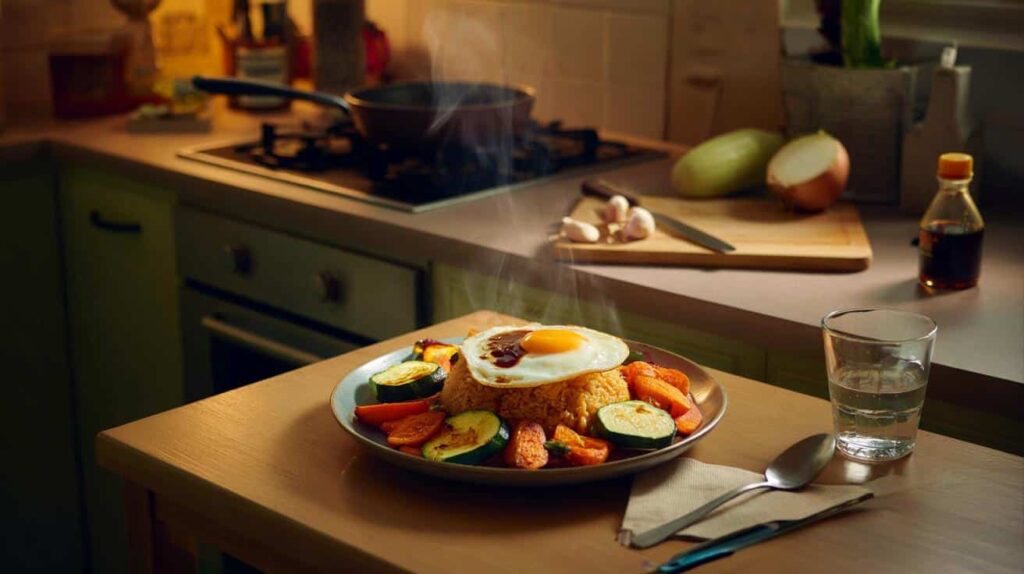
Not because it was beautiful or Instagram-worthy, but because for the first time in weeks I felt… grounded. I had cut up real vegetables, used a real pan instead of a microwave tray, and sat down at my own table without my phone lighting up in front of me.
The dish was nothing remarkable. It had roasted vegetables in a bowl with sticky rice and a fried egg plus some sweet & spicy sauce. When I finished eating I noticed an unusual sense of calm inside me. I was neither stuffed nor still hungry. I simply felt like someone who had just eaten a good meal.
When you spend your days managing emails and ordering food through apps it starts to make you wonder what eating properly actually means. The phrase sounds simple enough but it gets complicated fast. Does it mean following nutritional guidelines? Does it mean eating organic food? Does it mean cooking everything from scratch at home? Most of us know the basic rules. We should eat more vegetables and less processed food. We should drink water instead of soda. We should probably skip that third slice of pizza. But knowing these things & actually doing them are completely different matters. The problem is that modern life works against healthy eating. You finish work late & feel exhausted. The last thing you want to do is spend an hour cooking dinner. So you open an app and order something that arrives in twenty minutes. It tastes good and solves your immediate problem of being hungry. This pattern repeats itself day after day until it becomes your normal routine. You tell yourself it’s temporary. You promise that next week you’ll start cooking real meals. But next week comes & nothing changes. The truth is that eating properly requires time and energy that many people simply don’t have. It requires planning your meals in advance. It requires going to the grocery store regularly. It requires having basic cooking skills and the motivation to use them after a long day. Some people manage to do all of this successfully. They meal prep on Sundays. They pack lunches for work. They keep their kitchens stocked with healthy ingredients. But for many others this level of organization feels impossible to maintain. Maybe eating properly doesn’t have to mean perfection. Maybe it just means making slightly better choices when you can. Ordering a salad instead of fries sometimes. Keeping fruit around for snacks. Cooking one or two meals at home each week instead of none. The goal shouldn’t be to follow some ideal diet that only works in theory. It should be to find an approach that actually fits into your real life with all its complications & limitations.

And why one simple, homemade meal can make you feel like you can start over.

When a simple plate seems like a small win
There is a type of hunger that has nothing to do with food or calories. Some people feel empty inside even when their stomachs are full. This emptiness comes from somewhere else entirely. It might be a need for connection with other people or a desire to feel like life has meaning and purpose. This kind of hunger shows up in different ways. Someone might keep themselves busy all the time to avoid feeling it. Another person might search for something to fill the void but never quite find what they need. The feeling can be subtle or it can be overwhelming. People often try to satisfy this hunger with things that don’t really work. They might buy more possessions or seek constant entertainment. They might throw themselves into work or scroll endlessly through social media. These things provide temporary relief but the empty feeling always comes back. The real challenge is figuring out what will actually satisfy this deeper need. For some people it means building stronger relationships with family and friends. For others it involves finding work that feels meaningful or developing a spiritual practice. Some people discover that helping others or creating something new fills that space inside them. Recognizing this type of hunger is the first step toward addressing it. Many people go through life feeling vaguely dissatisfied without understanding why. They assume something must be wrong with them or that they just need to try harder at whatever they’re already doing. The truth is that humans need more than just physical sustenance to feel truly satisfied. We need purpose and connection and the sense that our lives matter in some way. When those needs go unmet we experience a hunger that no amount of food can ever satisfy.
You know how it goes. Breakfast is just coffee. Lunch is some bland fast food. Dinner is whatever you can grab while standing at the counter. Then late at night your body suddenly protests. You spend the whole day ignoring what you eat. Morning starts with caffeine instead of real food. Midday brings something quick and forgettable. Evening means eating random leftovers without even sitting down. When nighttime arrives your stomach finally objects. The pattern repeats itself constantly. Coffee replaces a proper breakfast. Lunch becomes whatever beige thing you can eat quickly. Dinner turns into standing at the fridge and eating with your hands. Then your body decides it has had enough and lets you know about it after dark.
That night I opened the fridge & found almost nothing inside. There was a wilted carrot & half an onion and one zucchini and some rice from two days earlier. This is normally when I would order delivery instead. But I grabbed a pan & heated some oil with salt and garlic & stirred the rice until it came back to life. I roasted the vegetables until the edges turned brown and tasted sweet.
The plate looked unappealing after ten minutes had passed. However it carried the distinct aroma of a proper meal. My typically wandering thoughts suddenly became focused.
I started thinking about all those times when I ate a lot but still felt hungry afterward. Those big hotel breakfasts with plates stacked full of food. Those buffet dinners where you go back for more just because you can. Those lunches at your desk while you type out emails between bites. It seems odd but none of those meals stay with you the way a simple home-cooked dinner does.
After a long train ride I stayed with a friend’s family. Her dad made lentils with onions and tomatoes and put an egg on top. That was the whole meal. There was no appetizer and no dessert and no fancy multi-course menu. We sat at a wobbly table with dogs walking around our feet. He told me to eat and said I would feel human again afterward.
That bowl stayed with me. It was not because the bowl itself was perfect. It stayed with me because it felt like someone had actually noticed a basic need that usually goes unseen. The need was to eat something real at a real table. It was the need to feel like you matter as a person.
That feeling makes sense in a quiet way. Your body tracks more than nutrients alone. It tracks the context and the pace and the smell and even the sound of your fork hitting the plate. Your senses start eating before the first bite arrives. The sizzling happens and the spices warm up and you take that little taste from the spoon to check if the seasoning works.
That feeling of anticipation tells your brain, “Food is coming, you can relax.” Your hunger isn’t in a hurry when you sit down; it’s ready. So you usually stop when you’re full, not when the box is empty. Real cooking, even the simplest kind, gives hunger a structure that snacking on random things never will.
Let’s be honest: no one really does this every day.
Your body knows when you do, though. And so does your brain.
The meal that makes the whole night different
That night I made dinner without following any recipe. I just used what was in my kitchen. I combined a cup of cooked rice with one zucchini and half an onion. Then I added a carrot and topped it with a fried egg. For seasoning I used soy sauce and a spoon of honey along with some chili flakes. I cooked everything in whatever oil was sitting by the stove.
First I sliced everything into thin pieces because it seemed easier that way. I heated some oil in a pan and cooked the onion until it turned soft with a light golden color. I arranged the zucchini and carrots on a separate baking tray & drizzled them with oil and salt before roasting them at high heat until the edges became crispy. Then I added the rice to the pan with the onion and poured in some soy sauce and water to help it steam and soften.
Place the egg in the pan for the final step. The edges need to turn crispy while keeping the yolk runny. Add the roasted vegetables on top and finish with honey and chili.
You will likely create your own version if you attempt to copy it. That is exactly what should happen. This type of dish focuses more on presentation than specific ingredients. Try heating up something different. Combine various textures. Include an egg or cheese or beans to make the meal feel complete.
A lot of us think that cooking only matters when it is complicated. We believe it only counts as real cooking if the ingredients have fancy names or the sauce takes four hours to make. Anything simpler than that feels like just throwing things together. This mindset makes us wait for the perfect moment & the perfect recipe. We tell ourselves we will cook when we have more energy after work. The truth is that simple cooking is still real cooking. A good meal does not need to be complex or time consuming. You can make something satisfying without spending hours in the kitchen or using ingredients you cannot pronounce. The meals you make on a regular Tuesday night are just as valid as the ones that require advanced techniques. We should stop waiting for ideal conditions that rarely come. Most days we are tired after work and that is normal. Cooking does not have to be an elaborate production every single time. Sometimes the best meals are the ones that come together quickly with basic ingredients you already have at home. When you stop holding yourself to impossible standards you start cooking more often. You realize that feeding yourself well is not about impressing anyone or following complicated rules. It is about making food that tastes good and fits into your actual life. Simple cooking is not a compromise or a shortcut. It is just cooking.
The delivery person shows up at your door before you know it. You lose out on the satisfaction that comes from eating food you prepared with your own hands.

Another trap that is hard to notice is eating while you do other things at the same time. When you eat in front of the television or while scrolling through your phone you stop paying attention to your food. Your brain does not register how much you are consuming because it focuses on the screen instead of the meal. This means you might eat far more than your body actually needs without even realizing it. Studies show that people who eat while distracted tend to consume larger portions. They also feel less satisfied after finishing their meal. The reason is simple. Your mind needs to connect with the eating experience to send proper signals about fullness to your body. The solution is straightforward. Try to eat at a table without any screens nearby. Focus on the taste and texture of your food. Notice when you start feeling full. This practice helps you develop a healthier relationship with eating and makes it easier to control portion sizes naturally. Making this one change can have a significant impact on your eating habits over time. You will likely find that you enjoy your meals more and feel better about the amounts you consume.
I had my laptop open with a series playing while I scrolled between bites. I could barely taste anything. The food I made that night changed the rhythm. I had to stop because it was too hot. The egg yolk slowly dripped into the rice. The vegetables were only slightly burnt. I was staring at my own plate.
A nutritionist told me to treat my meals like spending time with an old friend. You should be completely present while eating. This does not need to happen at every meal but it should happen sometimes. The advice stuck with me because it changed how I thought about eating. Most of us rush through meals while doing other things. We eat at our desks while working or scroll through our phones at the dinner table. We treat food as fuel that we need to consume quickly so we can move on to the next task. But this approach makes us miss something important. When we eat without paying attention we often eat too much or too little. We do not notice the flavors or textures. We do not give our bodies time to register fullness. We turn eating into a mechanical process instead of an experience. The nutritionist was suggesting something different. She wanted me to occasionally slow down and actually notice what I was eating. This meant putting away distractions and focusing on the meal itself. It meant noticing the colors on my plate and smelling the food before taking a bite. It meant chewing slowly and tasting each ingredient. This kind of mindful eating has real benefits. Research shows that people who eat more slowly tend to eat less overall. They feel more satisfied with smaller portions. Their digestion improves because their bodies have time to process the food properly. They also enjoy their meals more because they actually taste what they are eating. I started practicing this approach once or twice a week. I would sit down with my lunch and do nothing else. No phone. No computer. No book. Just me & my food. At first it felt strange and uncomfortable. I realized how much I relied on distractions during meals. But after a few tries it became easier. I noticed things I had missed before. I could taste individual spices in dishes I had eaten dozens of times. I realized when I was actually full instead of just eating everything on my plate out of habit. I found myself enjoying meals more even when the food was simple. The practice also changed my relationship with food in general. I stopped seeing meals as interruptions in my day. Instead they became small breaks where I could reset & recharge. Even a ten minute lunch where I paid full attention felt more refreshing than a thirty minute lunch spent multitasking. You do not need to do this at every meal. That would be unrealistic for most people. But trying it sometimes can make a real difference. Pick one meal this week and eat it without any distractions. Notice what happens. You might be surprised at what you discover.
# Mindful Eating Made Simple
For the first five minutes of your meal turn off the television and put your phone away. Take your food out of the cooking pot or storage container and place it on an actual plate. Try to pause and breathe between bites when you think about it. Notice three simple things while you eat: how your food smells what the texture feels like in your mouth, and whether it’s hot or cold. When you start to feel satisfied stop eating for a moment even if food remains on your plate. These small changes might seem pointless when you read about them. But when you try them on an ordinary Tuesday evening they can leave you feeling genuinely satisfied for the rest of the night.
What “eating right” really does for you
I started noticing the pattern after that night. When I cook something basic like pasta with garlic and oil or a vegetable omelet or toast with something warm on top I feel better. I snack less but I don’t make strict rules about it. I sleep more soundly and I’m more patient.
Sitting down for a meal matters not because every dish is perfectly nutritious but because it sends yourself a clear signal that you deserve a proper plate and ten minutes of peace. This simple message carries more weight than any calorie count or nutrition label ever could. Our society obsesses over carbohydrates and protein & which ingredients to avoid but rarely discusses the actual experience of eating and how it makes us feel. The focus stays locked on numbers and food categories while the emotional & mental aspects of meals get ignored. Taking time to sit at a table transforms eating from a rushed task into something that acknowledges your own worth. This shift in perspective matters more than whether you chose the salad or the sandwich.
Making that dish showed me something important about cooking. A good meal does not need to be perfect. What matters is the effort you put into it. The real value is not in having every ingredient just right. The real value comes from how the food makes people feel after they finish eating.
Main point
Simple cooking counts
You only need one pan and some basic ingredients to make a filling meal in 10 to 15 minutes. This approach makes cooking less stressful because you do not have to prepare anything complicated. When you keep meals simple you are more likely to actually cook instead of ordering takeout. The whole process becomes manageable and you can still end up with something satisfying to eat.
Context affects how happy you are
Eating while you sit down without distractions helps you feel more satisfied and relaxed. This prevents overeating & makes every meal more enjoyable on an emotional level.
Little rituals make a big difference.
Taking a breath between bites helps you notice the textures of your food. Using a real plate instead of eating from a container makes the experience better. These small habits make regular meals feel more meaningful without requiring you to change your entire routine.
Frequently Asked Questions:
How do I “eat right” when I’m tired after work?
You should keep some basic emergency supplies at home. Stock up on eggs and frozen vegetables along with rice or pasta. Make sure you have a sauce or spice mix that you enjoy. The goal is to have one hot item plus one vegetable and one comfort food item available. This combination typically takes only fifteen minutes to prepare into a meal.
Do you have to eat healthy food to feel full?
Not really. A balanced plate helps but you also need to eat slowly & pay attention to feel properly fed. A simple grilled cheese with some tomatoes on the side can feel more satisfying than a salad eaten quickly at your desk.
What if I really don’t know how to make food?
Learn to cook one simple dish & keep making it. Try fried rice with eggs and vegetables or pasta with garlic & tomatoes. Make this same meal once every week until you get tired of it. When you finally feel bored with that dish you have actually learned your first important cooking skill.
Is preparing meals the only answer?
Not always. Some people find that batch cooking works for them but it is not the only way. Making a new dish quickly a few times a week can change how your body and mind feel about food.

How often should I try to have this kind of “proper” meal?
You should cook at home whenever your schedule allows it. For most people starting with two or three evenings each week works well. You do not need to be perfect about this. The main point is to prepare enough proper meals so your days do not turn into an endless stream of random snacks.
 This 1,500 hp monster will let Turkey join an elite tank engine club that France left years ago