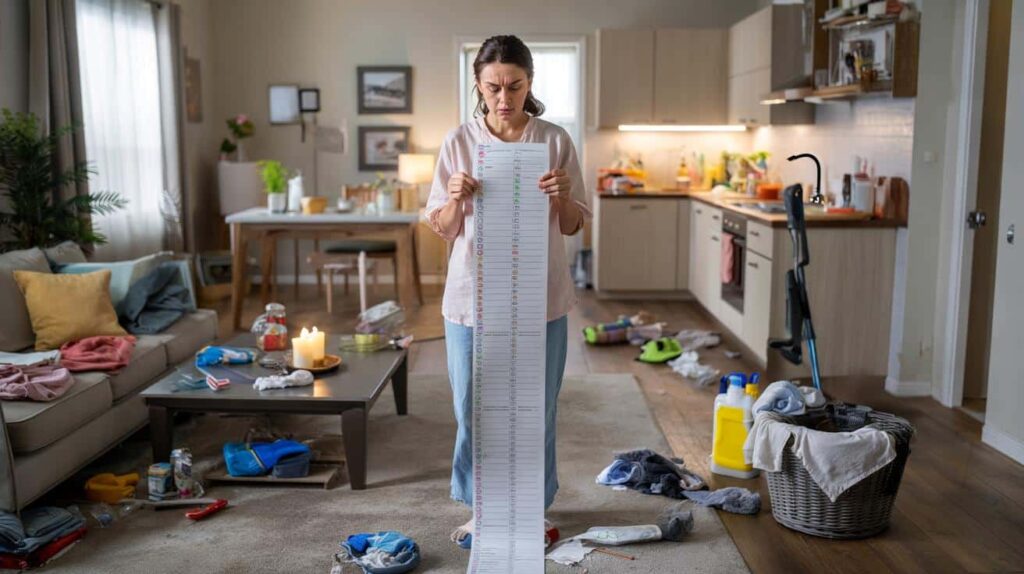
The vacuum is making a lot of noise, the washing machine is going around and around, and the sink is still full. You began the day with a cleaning schedule that was color-coded, a new candle burning, and a promise to your future self that “This time, I’ll keep up with everything.” By 4 p.m., the schedule is buried under a mountain of mail, your back hurts, and the only thing that isn’t dirty is the guilt in your chest.
You wonder how other people manage to keep their homes clean while also keeping their kids happy and maintaining their sourdough starter. You scroll through social media and start comparing yourself to others. Each comparison makes you feel worse about yourself.
You worked hard to create your daily routine. But then it begins to fall apart without you even noticing at first.

When “perfect” quietly messes up your cleaning routine
People are too lazy to stick to their cleaning schedules most of the time. The bar was set at Olympic level from the start, so they crash. You don’t just want a clean house; you want the one you see on Instagram at 10 a.m. on a Tuesday.

Your routine is like the military’s: clean the floors and bathrooms every day, keep the clutter to a minimum, and do a deep clean every weekend. On paper, it looks good. For a few days, it even feels exciting.
Then real life comes in with dirty shoes.
Emma is 34 years old & has two kids while working full-time. In January she found a 30-day extreme cleaning challenge on Pinterest and printed it out to hang on her fridge. The first day told her to clean the baseboards. The second day was about giving the oven a thorough cleaning. The third day required her to clean out her entire closet.
She did great in the first week. The house looked great. She posted pictures of herself before and after and got a lot of likes. In the second week, her youngest got sick, she couldn’t sleep, and the list suddenly felt like a bad joke.
The unopened meal prep containers in the fridge felt like a failing grade by day eleven. The entire routine collapsed completely on day fourteen.
Expecting too much doesn’t just add to the work; it also changes how you feel about cleaning. It stops being maintenance and turns into a test of your worth. If you miss a day, you’re not “busy,” you’re “failing.” If you skip one part of the list, your brain quietly says, “Well, it’s ruined now.”
After that, it’s easy to go from “I’ll catch up tomorrow” to “I’ll start again next month” to “I’m just not a tidy person.” The routine fails, not because it was pointless, but because it was set up like a sprint when your life is really a marathon.
The truth is very simple: routines that don’t let people have bad days don’t work for real people.
Lowering the bar so that the routine finally works
A stable cleaning routine often starts with something that seems small and unimportant. One surface. One room. One habit you refuse to skip even on your busiest day of the week. The trick is not to clean everything at once. The trick is to pick one thing and do it every single day until it becomes automatic. Maybe you wipe down the kitchen counter every morning after breakfast. Maybe you make your bed before you leave the house. Maybe you put away your shoes as soon as you walk through the door. These small actions might feel pointless at first. They might seem too simple to matter. But they create a foundation. They train your brain to see cleaning as a normal part of your day instead of a huge task you keep avoiding. Most people fail at cleaning routines because they try to do too much. They see a messy house and decide they need to deep clean everything in one weekend. They scrub & organize for hours. Then they feel exhausted and never want to clean again. That approach does not work for most people. It creates a cycle of intense effort followed by complete avoidance. You end up with a house that swings between spotless & chaotic. The better approach is to start so small that it feels almost silly. Pick one task that takes less than five minutes. Do it every day for two weeks. Then add another small task. Build slowly. This method works because it removes the mental resistance. When a task only takes three minutes you cannot talk yourself out of it. You cannot say you are too tired or too busy. You just do it and move on with your day. Over time these small habits stack up. Your house stays cleaner without massive effort. You stop feeling overwhelmed by mess because you handle it in tiny pieces every day. Cleaning becomes boring and routine instead of stressful and dramatic.
Think, “Every night, the kitchen sink is empty.” Or “Before bed, the floor in the living room gets a quick reset.” These are tasks that you can count on. They aren’t heroic; they happen over and over.
On good days, you can always add more. You only delete the anchor on good ones.
The all-or-nothing Saturday is a trap that many people fall into. You have not cleaned up the mess in days so you decide to plan a big reset. You set aside five hours for cleaning and doing laundry and organizing drawers and maybe even moving furniture around for good measure. This approach seems logical at first. You think that one massive effort will solve everything and get your space back in order. But this strategy usually backfires in several ways. First of all you probably will not finish everything you planned. Five hours sounds like a lot of time but cleaning tasks always take longer than expected. You start with the kitchen and before you know it two hours have passed and you are only halfway done with one room. Second you will likely feel exhausted & frustrated by the end. Marathon cleaning sessions drain your energy & motivation. By hour three you are moving slower and cutting corners just to get through your list. Third this pattern does not actually solve the underlying problem. The mess built up over several days because you did not maintain basic habits during the week. One big cleaning day does not create those habits. Next week you will probably find yourself in the same situation planning another all-or-nothing Saturday. The better approach is to break tasks into smaller daily actions. Spend fifteen minutes each day on basic maintenance. Wash dishes right after meals. Put clothes away instead of leaving them on the chair. Wipe down surfaces before they get sticky. These small consistent actions prevent the mess from building up in the first place. You never reach the point where you need a five hour marathon session. Your space stays reasonably clean without requiring huge blocks of time or energy.
It feels wonderful when you finally tackle that deep clean. You experience a rush of accomplishment & convince yourself that you’ll maintain this level of organization from now on. But then the following weekend arrives and your friend invites you somewhere. Or maybe you’re exhausted from the work week. Perhaps your children have a sports event to attend. Whatever the reason, that thorough cleaning session never happens. The pattern becomes familiar over time. You complete one major cleaning effort & feel proud of what you’ve achieved. You look around at the spotless surfaces and organized spaces and think about how you’ll keep everything this way. The intention is genuine in that moment. Reality sets in quickly though. Life continues with its usual demands & complications. Work deadlines pile up. Social obligations appear on your calendar. Family needs require your attention and energy. The cleaning routine you imagined maintaining gets pushed aside by these other priorities. Before long you notice the clutter returning. Dishes accumulate in the sink again. Laundry baskets fill up. Mail and papers create new piles on the counter. The clean state you worked so hard to achieve gradually disappears. You find yourself back where you started looking at the mess and thinking about when you’ll have time for another big cleaning day.
The house feels “too far gone” again, and you’re back where you started, waiting for the next mythical free Saturday to save you.
The routines that work are the ones that know you will be tired, distracted, and sometimes angry at the world. Instead of guilt, they give you backup plans.
The plain truth is that no one really does this every single day.
Sometimes “good enough” is the best way to discipline someone in the long run.
Instead of deep-cleaning once a week, wipe down the bathroom sink and mirror every other day.
Instead of doing three loads of laundry on Sunday, do one load most days.
Keep a basket for random junk in one “drop zone” and empty it once a week.
Set a timer for 10 to 15 minutes for the nightly reset, then stop.
Don’t do five “hero tasks” a day; do one.

From stress to rhythm: how to find a routine you like
Quiet shame is what keeps many people from sticking to their cleaning schedules. The crumbs on the counter aren’t just crumbs; they’re “proof” that you’re not organized, disciplined, or grown-up enough. That feeling makes you go back and forth between overdoing it and giving up.
Cleaning is easier if you think of it as a rhythm instead of a judgment. That means asking, “What level of clean really helps my life, my energy, and my mental health?” not “What level of clean shows I have my life together?”
That means a clean house for some people. For some, it’s clear surfaces, clean dishes, and floors that don’t make noise when you walk on them.
You can focus on small habits instead of trying to meet impossible standards once you understand your actual starting point. You might decide that keeping dishes out of the sink overnight is your main goal. Or you might choose to keep the bedroom peaceful for better sleep even if the hallway is covered with laundry.
You can also change your focus. The first week: kitchen surfaces. Week two: keeping the bathroom clean. The third week is for closets. The goal isn’t to get everything right. It’s to keep things moving slowly so that no one area feels like it’s the end of the world.
We have all experienced the moment when a single full laundry basket becomes four baskets and the floor is no longer visible. It happens to everyone when laundry piles up quickly. One basket fills up and then suddenly there are multiple baskets everywhere. Before you know it the entire floor gets covered with clothes & you cannot see the ground anymore. This is a common situation in many households. The laundry starts small but grows fast. What begins as one basket of dirty clothes turns into several baskets. The clothes spread across the floor and take over the space. The floor disappears under all the fabric.
Expectations quietly change the way you talk to yourself while you clean. That voice inside your head can either give you energy or take it away faster than any mop.
“Your house isn’t a stage; it’s a tool that should help you.”
When you stop thinking about your perfect house and begin improving the place where you actually live, everything starts to shift. You realize that waiting for ideal circumstances means missing out on making your current space better right now. The home you have today deserves attention and care instead of being treated like a temporary stop on the way to something else. Small changes add up over time. Painting a room in a color you love makes you happier every time you walk through the door. Fixing that leaky faucet you have been ignoring for months brings a sense of accomplishment. Rearranging furniture to create better flow transforms how you move through your daily routine. Your current home becomes more than just a place to sleep and eat. It turns into a reflection of who you are and what matters to you. Each improvement you make strengthens your connection to the space and makes it feel more like yours. The dream home you imagine might never exist exactly as you picture it. But the home you live in right now is real & present. It offers immediate opportunities for transformation that do not require waiting for perfect timing or unlimited resources. Working with what you have teaches valuable lessons about creativity and resourcefulness. You learn to see potential in overlooked corners and unused spaces. You discover that satisfaction comes from progress rather than perfection. This shift in focus changes your relationship with your living space. Instead of feeling temporary or inadequate your home becomes a project worth investing in. The energy you once spent dreaming gets redirected into doing, & that makes all the difference.
# Simplify Your Cleaning Routine
Instead of telling yourself you have to clean the whole house try changing your approach. Focus on cleaning just one room that you use the most. This simple shift makes a big difference. When you think about cleaning an entire house the task feels overwhelming. Your mind pictures scrubbing every surface in every room. That mental image alone can stop you before you even start. But when you narrow your focus to one room everything changes. Pick the room where you spend most of your time. For many people this is the bedroom or living room. Maybe it’s your home office or kitchen. Cleaning one room takes less time and requires less energy. You can finish it in a single session without feeling exhausted. The completed task gives you a sense of accomplishment instead of frustration. This approach works because it matches how our brains handle tasks. We perform better with specific goals rather than vague ones. A clean living room is specific. A clean house is too broad. After you finish that one room you might feel motivated to tackle another space. Or you might not. Either outcome is fine. The important part is that you accomplished something real instead of doing nothing because the original goal felt too large. Start small & build from there. One room today creates momentum for tomorrow. This method turns an impossible task into a manageable one.
Plan your routines around the times when you really have the most energy, not the times when you think you do.
Some parts will stay “good enough” instead of magazine-ready.
# Keep Household Tasks Simple and Manageable
When you want family members to help around the house, avoid creating lengthy lists of responsibilities. Long chore charts can feel overwhelming & often lead to resistance or procrastination. A better approach is to assign each person one or two specific tasks that become their regular contribution. This method works because it creates clear expectations without the burden of tracking multiple duties. For example one person might always handle taking out the trash while another waters the plants. These focused responsibilities are easier to remember and become natural habits over time. Small defined roles also give people a sense of ownership over their particular task. They know exactly what they need to do and can take pride in doing it well. This strategy reduces the mental load of managing a complex system. Nobody needs to check charts or remember long lists. Everyone simply knows their part & does it. The simplicity of this approach makes it sustainable for busy households where people already juggle work and school commitments.
Let there be “messy seasons” without getting rid of the whole system.
Main pointValue for the reader in detail
Start with smaller tasks than you feel you should. Focus on simple activities like clearing the sink before bed or tidying up for ten minutes. This creates a routine you can maintain even when you are having difficult days. The key is building habits that feel manageable rather than overwhelming. When you set expectations too high you are more likely to give up entirely. Small consistent actions add up over time and create momentum that makes larger tasks feel less daunting. Choose one or two basic cleaning tasks that take minimal effort but make a visible difference in your space. The act of completing these small goals provides a sense of accomplishment that can motivate you to do more. However the primary objective is simply maintaining the baseline routine regardless of how you feel on any given day. This approach works because it removes the pressure of perfection. You are not trying to deep clean your entire home or maintain an immaculate environment. You are simply committing to a few minutes of basic maintenance that keeps things from getting out of control. On days when you have more energy you can always do additional cleaning. On days when you are struggling you still have your minimal routine to fall back on. The consistency matters more than the intensity. A small amount of daily effort prevents the buildup that makes cleaning feel impossible. When you let things pile up for weeks the task becomes so overwhelming that you avoid it entirely. By contrast a nightly sink reset takes less than five minutes but ensures you always wake up to a clean kitchen.
Stop trying to be perfect. Set a realistic standard for “livable clean.” Lessens guilt and helps routines last in real life.
Make things that fit your real energy. Choose chores that fit your schedule, mood, and support system. Cleaning doesn’t feel like a constant failure anymore.
Questions and Answers:
Why do I lose interest in new cleaning routines so quickly?
You likely created a routine based on how you feel when you are at your best instead of how you feel on a typical day. When your energy goes down the system falls apart and your mind sees this as failing. Reducing what you try to do each day makes it easier to stay motivated.
Is it lazy to accept cleaning that is “good enough”?
No. Good enough is a plan & not a reason. It keeps your home running smoothly & lowers your stress. This approach works much better than having short bursts of activity that lead to burnout.
How many cleaning jobs should I do each day?
One main task & one optional bonus work well for most people. If you don’t really enjoy cleaning or live a fairly simple lifestyle trying to do more than that usually doesn’t last long.
What if my house is already too much to handle?
Begin by choosing a single room or perhaps just a small corner to work on. Set a timer for ten to fifteen minutes every day and focus only on that space. Avoid the temptation to tackle every problem in your home simultaneously. After you have established order in one area gradually expand your efforts to include additional spaces.

How can I stop looking at other people’s homes online?
Your social media feed should make you feel good instead of stressed. If certain accounts leave you feeling inadequate about your home you can mute them. Look for content creators who share honest glimpses of their actual living spaces rather than perfectly styled rooms. Those flawless images you see online are carefully planned & edited. They represent someone’s work project rather than their everyday reality. The people in those photos often spend hours arranging objects and adjusting lighting to create an ideal scene. Your living space exists to serve you and your household. It does not need to match any particular aesthetic or meet standards set by strangers on the internet. A functional home that accommodates your daily routines and makes you comfortable matters more than one that photographs well.