Improving flexibility doesn’t require intense stretches or painful positions. It’s a gradual process that works best when the body feels safe, relaxed, and supported through regular movement. Yoga is the perfect solution for beginners, combining gentle stretching, controlled breathing, and mindful awareness. These twelve beginner-friendly yoga poses not only help relieve tight muscles but also enhance joint mobility and encourage smoother movement without pushing the body too hard.
Why Yoga is Ideal for Flexibility Beginners
Many beginners believe that flexibility is a prerequisite for starting yoga, but this isn’t true. Flexibility is developed through consistent practice, not something you need to have before you start. Yoga supports flexibility by calming the nervous system, allowing muscles to release tension and lengthen naturally. Gentle, repetitive movements also improve circulation, lubricate the joints, and promote long-term mobility, helping beginners feel more comfortable while they progress.
Mountain Pose: A Foundation for Flexibility
Mountain pose is a simple yet powerful stance that promotes alignment and body awareness. By standing tall with relaxed shoulders and lengthening the spine, it creates a solid foundation for better posture and flexibility. This subtle pose helps improve the way the body supports itself in daily activities, laying the groundwork for future flexibility gains.

Standing Forward Fold: Stretching Hamstrings and Spine
This gentle forward fold is perfect for beginners as it stretches the hamstrings, calves, and back. With a slight bend in the knees, the posture stays comfortable while releasing neck and upper-back tension. The relaxed head position aids in releasing any stiffness, making it a great practice for improving overall flexibility.

Low Lunge: Easing Hip Flexor Tension
Low lunge is especially helpful for individuals with tight hips due to prolonged sitting. It opens up the front of the hips while strengthening the legs. Improving hip flexibility not only aids in posture but also reduces discomfort in the lower back.
Cat-Cow Stretch: Enhancing Spinal Mobility
The Cat-Cow stretch is a flowing sequence that enhances spinal flexibility from the neck to the lower back. By coordinating breath with movement, this pose helps to release stiffness in the shoulders and spine while safely warming up the body for deeper stretches.
Modified Downward Facing Dog: Full Body Stretch
This well-known stretch targets the back, shoulders, hips, calves, and hamstrings. Beginners can keep the knees bent and focus on lengthening the spine rather than straightening the legs. It’s an excellent way to stretch multiple areas of the body in a balanced and gentle way.
Seated Forward Fold: Gentle Lengthening of the Body
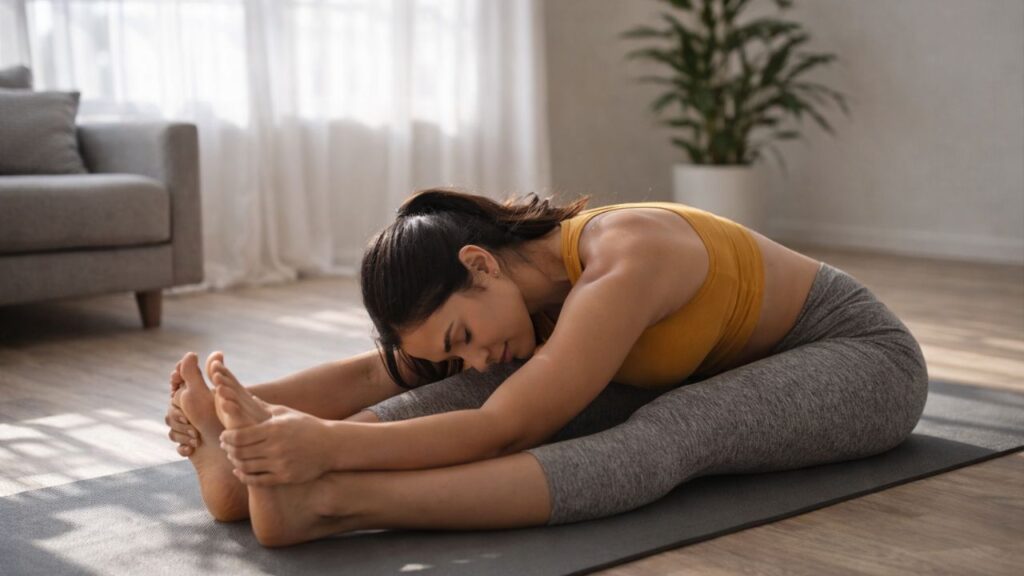
Seated forward fold stretches the hips, hamstrings, and lower back without putting strain on the joints. Its relaxing nature helps encourage gradual muscle lengthening, promoting flexibility without discomfort.
Butterfly Pose: Deepening Inner Hip Flexibility
Butterfly pose opens the inner thighs and groin gently. By holding this pose with calm breathing, it encourages flexibility in areas that are often tight for beginners, such as the hips and inner thighs.
Seated Twist: Increasing Side Body Mobility
Seated twists are excellent for enhancing flexibility in the spine, waist, and hips. They help restore natural rotation and alleviate stiffness caused by poor posture, making daily movements more fluid.

Child’s Pose: Full-Body Stretch and Rest
Child’s pose stretches the hips, back, and shoulders, while offering complete relaxation. It is an excellent pose for beginners because it combines gentle stretching with restorative rest, making it perfect for relieving tension after a yoga session.
Supine Knee-to-Chest: Lower Back Relief
This reclining pose stretches the lower back and hips, offering relief for those who feel stiff after sitting for long periods. It’s a soothing and restorative pose that helps decompress the spine and alleviate lower back tension.
Supine Figure Four: Outer Hip Flexibility
Supine figure four is an accessible hip opener that gently releases tension in the glutes and outer hips without straining the joints. This pose makes it easier to move through daily activities by increasing hip mobility.
Reclined Bound Angle Pose: Deep Relaxation
Reclined bound angle pose is a restorative position that helps open the hips and inner thighs with the support of gravity. By holding the position for longer periods, the body can deepen flexibility naturally without effort.
Consistency is Key for Flexibility Gains
Consistency is more important than intensity when practicing yoga for flexibility. Practicing these poses for 10–20 minutes, 4–6 times a week, will lead to noticeable flexibility improvements within a few weeks. Gentle daily practice helps the body gradually open up and gain flexibility over time.
Avoid These Common Flexibility Mistakes
Forcing a stretch, holding your breath, or comparing your progress to others can hinder flexibility gains. The key to progress is slow, comfortable movements with steady breathing. Always listen to your body to avoid pushing it too far.
The Benefits of Flexibility for Daily Life
Improved flexibility makes daily tasks such as walking, bending, and reaching more comfortable. As flexibility increases, you will experience less stiffness, better posture, and fewer aches, giving you more energy throughout the day.

Conclusion
Flexibility doesn’t require extreme effort—it requires patience, breath, and consistency. These twelve beginner-friendly yoga poses offer a safe and natural way to improve flexibility while calming the mind and supporting joint health. With regular practice, your body will gradually open, lengthen, and move more comfortably over time.