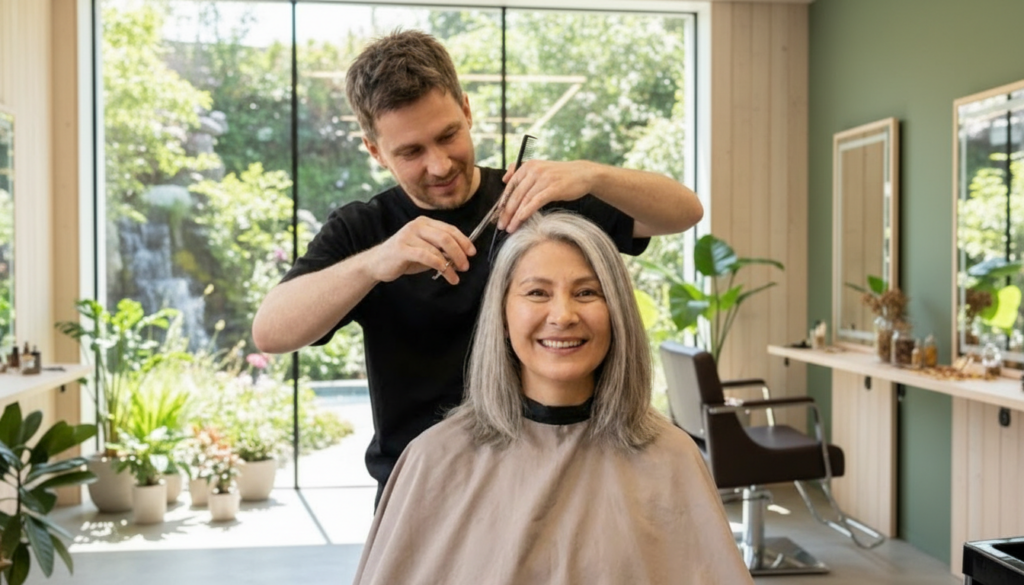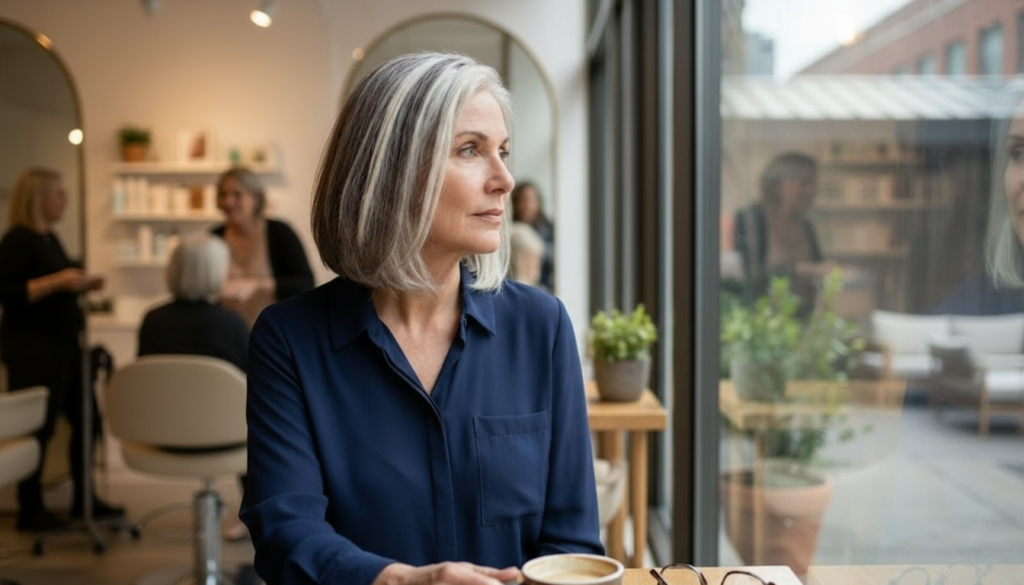
The woman in the salon chair was 67 years old. She wore a stylish blazer, bright lipstick, and a haircut she had had since 1998. Her stylist combed through the stiff, layered bob and said softly, “This cut is making you look older than your wrinkles.” She looked at her kind, tired eyes in the mirror.
She stopped moving and then laughed. A little bit nervously.
Younger women were walking out with light feathered styles that moved as they walked. She wanted that kind of movement instead of another practical haircut for older women.

Fifteen minutes went by before the stylist recommended a haircut that most professionals now consider ideal for women over sixty. This particular style enhances the jawline & makes the face appear more radiant. It can take five to ten years off your appearance without requiring any injections.

After 60, this is the one haircut that all the pros agree on.
If you ask five hairstylists what looks best on women over 60, you’ll get different answers: shag, bob, crop, “French” something. They’re all talking about the same kind of cuts, even though they use different words.
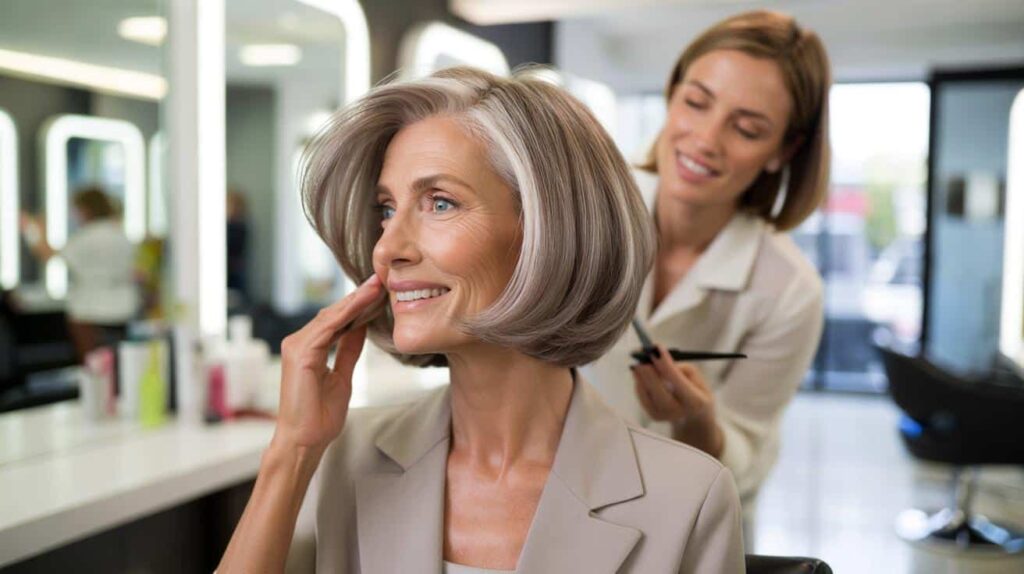
The modern bob works best for people over 60 when it sits at or slightly below the jawline. This style should have natural movement and a soft texture rather than looking stiff or overly structured. Think of it as a gentle and airy cut that frames the face while keeping the neck visible. The goal is to avoid anything that looks too rigid or severe.
This length is easy to manage and still looks feminine. It works well even if your hair is getting thinner or the texture is changing.
The curtain bangs haircut looks great on camera & in bright salon lighting because it refreshes your appearance in a subtle way. This style frames the face naturally without drawing too much attention to itself.
You can see this happen almost like a social experiment. Many clients over 60 tell their hairstylists they refuse to look like little old ladies when stylists suggest cutting their long tired hair into a modern bob. The resistance comes from a deep place. These women associate short hair with giving up on their appearance and accepting old age. They believe keeping their length means staying youthful and relevant. But the reality works differently. Long hair that lacks volume and health actually adds years to your appearance. It drags down your features and emphasizes thinning texture. The very thing they think keeps them young does the opposite. A well-cut bob brings life back to aging hair. It creates movement & body that long straggly hair cannot achieve. The style frames the face in a flattering way and draws attention to your best features instead of your hair’s condition. Modern bobs come in many variations. They can be soft & textured or sleek and polished. A good stylist customizes the cut to suit your face shape and hair type. The result looks current without trying too hard. The transformation often surprises these clients. They walk out looking fresher and more confident. Friends and family notice the change immediately. What they feared would age them actually does the reverse.
What happens next is almost funny. The client removes the cape and looks up. She places her hand on her jawline. She lifts her chin & tilts her head. Then she smiles in a way she has not smiled in years.
One stylist in Paris said that nine out of ten clients over 60 who try a soft bob decide to keep the style. A hairstylist in New York mentioned that women seem to stand taller the moment their heavy layered hair hits the floor.
# The Haircut That Changes Everything
A haircut does more than refresh your appearance. It transforms the way you experience your stage of life. When someone sits in the salon chair and watches their old style fall away, something shifts inside them. The mirror reflects back a different person. This person looks ready for new things. They look like someone who makes bold choices. Young adults often use haircuts to mark transitions. A dramatic cut before starting college signals independence. A sleek professional style announces career ambitions. Each snip of the scissors cuts away an old identity and shapes a new one. For people in midlife, a haircut can reverse years of playing it safe. That edgy bob or unexpected color says they refuse to fade into the background. They reclaim the confidence they had before responsibilities piled up. The haircut becomes an act of rebellion against invisible expectations. Older adults discover that the right cut makes them feel vital again. When they stop hiding behind outdated styles, they stop hiding from life itself. They book trips they postponed. They pursue interests they abandoned. The haircut gives them permission to be visible. The change goes deeper than vanity. A new haircut alters how people move through the world. They stand taller. They speak up more. They take risks they avoided before. The external change creates internal momentum. Friends & family notice the difference immediately. But they’re not just seeing a new hairstyle. They’re seeing someone who decided to take control. Someone who chose transformation over comfort. This is why a haircut matters so much. It serves as a physical declaration that change is possible. If you can change how you look you can change how you live. The scissors cut through more than hair. They cut through the stories people tell themselves about who they are and what they can do. The best haircuts don’t just suit your face. They match the life you want to live.
Never leave the bedroom door open at night; here’s why you should close it.
# Seven Home Design Trends That Will Stay Popular Through 2026
Before you start redecorating your home, you should know about these seven trends that will remain relevant into 2026.
## Natural Materials Take Center Stage
Wood stone and clay are becoming the foundation of modern interior design. Homeowners are moving away from synthetic materials & choosing authentic textures that bring warmth into their spaces. This shift reflects a growing desire to connect with nature even while indoors.
## Curved Furniture Replaces Sharp Edges
The era of rigid geometric furniture is fading. Sofas with rounded arms, circular coffee tables, and arched doorways are creating softer and more inviting rooms. These gentle shapes make spaces feel more comfortable and less formal.
## Earthy Color Palettes Dominate
Terracotta sage green, warm beige, and clay tones are replacing the stark whites and grays that dominated previous years. These colors create calming environments that feel grounded & peaceful. They work well in any room and pair easily with various design styles.
## Multifunctional Spaces Become Essential
Homes are adapting to serve multiple purposes. Living rooms double as home offices, & dining areas transform into craft spaces. Furniture that serves more than one function, like storage ottomans & expandable tables, helps maximize every square foot.
## Sustainable Choices Matter More

People are thinking carefully about where their furniture and decor come from. Vintage pieces, recycled materials, and items from local artisans are gaining popularity. This trend reflects both environmental awareness & a desire for unique items with character.
## Textured Walls Add Depth
Flat painted walls are giving way to surfaces with dimension. Lime wash plaster finishes, and textured wallpapers create visual interest without overwhelming a room. These treatments add sophistication while maintaining a natural feel.
## Personal Collections Get Displayed
Homes are becoming more personal as people showcase their interests and travels. Bookshelves filled with actual books, gallery walls with meaningful art, and displayed collections tell stories about the people who live there. This trend moves away from the impersonal staged look toward spaces that feel genuinely lived in. These trends share a common thread of authenticity and comfort. They prioritize how spaces make people feel rather than just how they look in photographs.
# Early February Stratospheric Warming Has Experts Concerned: Are Major Winter Forecast Changes Based on Science or Just Alarmism? Meteorologists are watching an unusual warming event high above Earth that started earlier than normal this February. This phenomenon in the stratosphere has sparked debate about whether the dramatic shifts we’re seeing in winter weather predictions represent genuine scientific concern or unnecessary panic. The stratosphere sits roughly 10 to 50 kilometers above the surface where most weather happens. When temperatures suddenly rise in this layer it can disrupt the polar vortex. This disruption often leads to significant changes in weather patterns across the Northern Hemisphere. What makes this particular warming event noteworthy is its timing. February warmings typically occur later in the season when their impact on surface weather is less pronounced. An early arrival means there’s more winter left for these effects to play out on the ground. Scientists point to several indicators that suggest this event deserves attention. Temperature readings from weather balloons and satellites show the stratosphere has warmed by dozens of degrees in just days. Wind patterns that normally circle the Arctic in a tight formation have weakened considerably. These changes match the signature of events that have previously led to cold outbreaks and persistent storm patterns. However some researchers urge caution about overstating what this means for everyday weather. The connection between stratospheric events & surface conditions remains complex and not every warming leads to dramatic winter weather. Previous events have produced varying results ranging from major cold snaps to barely noticeable changes. The challenge for forecasters lies in communicating uncertainty without either downplaying real risks or creating unwarranted alarm. Weather prediction has improved dramatically but the atmosphere still holds surprises that current models struggle to capture fully. As February continues the scientific community will monitor how this stratospheric warming evolves and whether it translates into the significant winter weather changes that some models suggest.
# Arctic Conditions Deteriorate in Unprecedented Ways
Meteorologists report that the Arctic environment is experiencing a decline through patterns that scientists have not previously observed. Weather experts who study polar regions indicate that the Arctic is undergoing significant environmental changes. These transformations are occurring through mechanisms that differ from historical climate variations. The deterioration involves multiple factors that interact in complex ways. Temperature patterns are shifting beyond the ranges that researchers documented in earlier decades. Ice formations are responding to these thermal changes in manners that existing models did not predict. Scientists emphasize that the current trajectory represents a departure from cyclical patterns that characterized Arctic conditions throughout recorded history. The region is entering a state that lacks direct comparison to past climate episodes. Researchers continue to monitor these developments while working to understand the underlying processes driving these changes. The observations suggest that the Arctic system is transitioning toward a configuration that differs fundamentally from its previous stable states.
# How Often Should You Wash Your Hair
Many people wonder about the right frequency for washing their hair. Daily washing works for some individuals while others prefer weekly sessions or something in between. Dermatologists have provided straightforward guidance on this common question. The answer is not as simple as following a fixed routine. Your personal hair washing schedule depends on several individual factors. Your hair type plays a major role in determining wash frequency. People with oily scalps typically need more frequent washing than those with dry hair. Fine hair tends to look greasy faster and may require daily washing. Thick or coarse hair can often go longer between washes without looking dirty. Your lifestyle and daily activities also matter significantly. Regular exercise that causes sweating usually means you need to wash your hair more often. People who work in dusty environments or use styling products heavily will benefit from more frequent washing. Those with relatively sedentary indoor jobs might manage with fewer washes per week. Scalp condition is another important consideration. Some people naturally produce more sebum than others. Medical conditions like seborrheic dermatitis may require specific washing schedules. Your dermatologist can recommend the best approach based on your scalp health. The products you use make a difference too. Harsh shampoos can strip natural oils and damage hair if used too frequently. Gentler formulations allow for more regular washing without causing harm. Conditioners and treatments can help maintain moisture balance regardless of your washing schedule. Most dermatologists suggest that people with normal hair can wash every two to three days. This frequency removes dirt and oil while preserving the natural protective layer. However this is just a general guideline rather than a strict rule. Finding your ideal washing routine may require some experimentation. Pay attention to how your hair looks and feels at different intervals. Adjust your schedule based on seasonal changes since humidity and temperature affect oil production.
How often you should shampoo depends largely on your hair type. People with oily hair typically need to wash more frequently than those with dry hair. Your lifestyle and daily activities matter too. If you exercise regularly and sweat heavily you may need to wash your hair more often. Those who work in dusty environments or use many styling products might also require more frequent washing. Scalp condition is another factor to consider. People with oily scalps often need to wash daily or every other day. If your scalp is dry or sensitive you should wash less frequently to preserve natural oils. Dermatologists emphasize that no universal rule exists. Rather than following a rigid schedule you should listen to your hair and scalp. If your hair appears greasy or your scalp feels itchy it may be time to wash. If your hair feels dry or brittle you might be washing too much. For most people washing two to three times weekly works well. However this varies significantly between individuals. The key is finding a routine that maintains clean and healthy hair without causing dryness or irritation.
Scientists believe that extensive research has shown a new kitchen appliance will take over from the microwave oven for good since it performs significantly better. Researchers have found through numerous trials that this innovative cooking device outperforms traditional microwaves in almost every way. The appliance heats food more evenly and preserves nutrients that microwaves often destroy during the heating process. Many households have already made the switch after discovering how much faster this device prepares meals compared to conventional microwave ovens. The technology behind it uses advanced heating methods that cook food thoroughly without creating cold spots or rubbery textures. Kitchen appliance manufacturers have invested heavily in developing this replacement technology over the past several years. They conducted thousands of tests to ensure the device could handle everything from reheating leftovers to defrosting frozen ingredients. Consumer feedback has been overwhelmingly positive according to early adopters who participated in product trials. People appreciate that their food tastes fresher and maintains better texture than anything prepared in a microwave. The new appliance also takes up less counter space than most microwave models while offering more cooking functions. It can steam vegetables and warm bread without making it soggy or tough. Energy efficiency studies show this device uses considerably less electricity than standard microwaves during typical daily use. This means lower utility bills for families who cook at home regularly. Industry analysts predict that within five years most kitchens will feature this appliance instead of a microwave oven. The transition mirrors how microwaves themselves replaced conventional ovens for quick heating tasks decades ago. Retailers report strong sales numbers since the product launched in major markets earlier this year. Many stores struggle to keep the appliance in stock due to high consumer demand.
Modern kitchens constantly welcome new technology designed to speed up cooking and simplify meal preparation. For decades the microwave has dominated as the go-to appliance for reheating leftovers and preparing quick meals. However a new challenger has entered the market that could potentially replace the microwave entirely. The air fryer has experienced remarkable growth in popularity over recent years. Many cooking enthusiasts now consider it superior to the traditional microwave. This compact device works by circulating hot air around food to cook it rapidly while creating a crispy exterior that microwaves cannot achieve. Unlike microwaves that often produce soggy or unevenly heated results air fryers deliver consistent outcomes every time.
The air fryer has become popular with professional chefs and home cooks because it handles many different tasks. It reheats pizza so it tastes freshly baked and cooks frozen food directly without thawing. It also bakes small amounts of cookies or roasts vegetables using minimal oil. This single appliance replaces several traditional kitchen tools. Energy efficiency is another major advantage. Air fryers consume less electricity than conventional ovens and reach cooking temperature more quickly. They produce less ambient heat as well which helps maintain comfortable kitchen temperatures during summer months. These features appeal to people who want to reduce their utility costs and environmental impact.
Learning to use an air fryer is much simpler than most people expect. The majority of models include preset buttons designed for popular foods such as chicken fish and french fries. You simply select the appropriate setting and allow the appliance to handle everything else. In many cases the food turns out better than it would using traditional cooking techniques.
Health benefits matter when choosing kitchen appliances. Air fryers need only a small amount of oil to create crispy food that usually requires deep frying. The final meals contain significantly fewer calories & less fat. Families looking to improve their diet without sacrificing taste will find air fryers to be a practical option.
# The Reality of Microwave Use
Even though microwaves offer certain advantages, they work best for specific tasks. They excel at heating liquids such as coffee or soup in a short time. They can also defrost meat more quickly than most alternative methods. However air fryers have proven to be superior for the majority of regular cooking and reheating needs.
The price has become more affordable over time. The first models carried high price tags but increased competition among manufacturers has driven costs down significantly. Many quality air fryers now sell for roughly the same amount as a decent microwave. Their expanded functionality makes them a smarter investment for the average household.
Many kitchens lack adequate counter space but modern air fryers address this problem with their compact designs. Several models include multiple cooking functions such as toasting and baking capabilities. This combination of features reduces kitchen clutter while expanding your cooking possibilities.
The shift away from microwaves reflects a broader change in how people approach cooking at home. Modern consumers are looking for appliances that deliver both convenience and quality. They want equipment that supports healthier eating habits while remaining accessible to users with limited cooking experience. Air fryers meet these expectations in ways that microwaves simply cannot match.
# The Air Fryer Revolution: Why Microwaves Are Losing Their Crown

Microwave sales are declining as households discover what air fryers can do. Industry experts predict this shift will continue as more people experience the advantages of these newer appliances. The once-specialty device has become a kitchen essential. The microwave revolutionized home cooking when it first appeared & served families faithfully for decades. But technology never stops advancing and better options emerge. The air fryer represents the next generation of convenient cooking with features that matter to modern consumers. If you’re still relying solely on your microwave it might be worth considering a change.

| Key point | Detail | Value for the reader |
|---|---|---|
| Modern bob length | Jaw to collarbone, following your natural neck and jawline | Instant visual lift without a drastic, scary chop |
| Soft layering and texture | Invisible layers, light movement at the ends, optional fringe | Hair looks fuller, less “helmet-like”, and easier to style |
| Age-harmonious styling | Natural finish, embracing wave and silver when possible | More authentic, less effort, and a freshness that reads as confidence |